
Budget Android phones have quietly gotten a lot better over the last couple of years. AMOLED screens that used to be a $600-phone feature now show up on $170 devices. 5G is standard instead of a luxury add-on. And a few brands, Samsung especially, have started promising five or six years of software updates on phones that cost less than a nice dinner out for four.
This guide is for anyone who wants a genuinely good phone without spending flagship money: students furnishing their first apartment, parents buying a kid’s first phone, seniors who want something simple and reliable, and anyone who just wants their next phone to be a smart purchase instead of an emotional one.
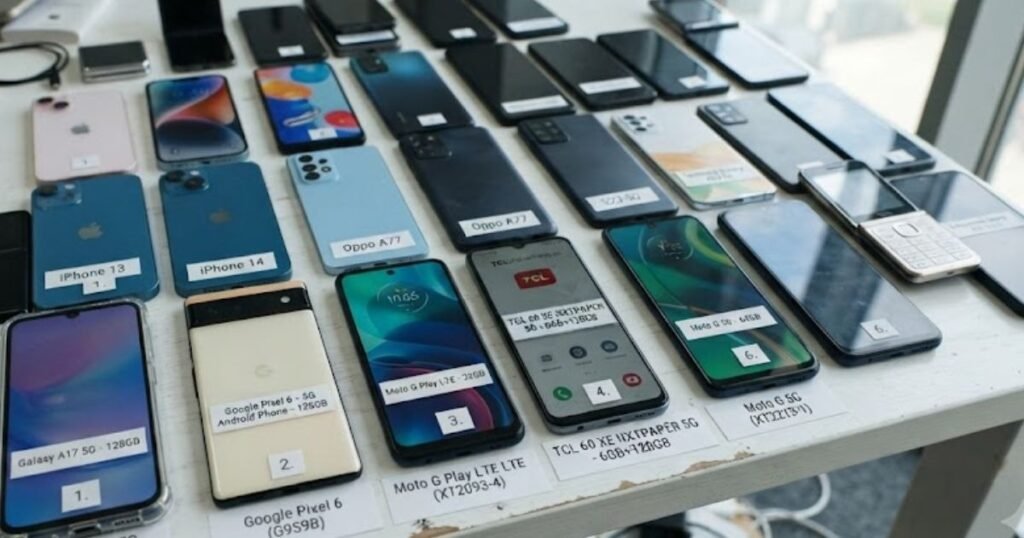
We spent time with six of the most talked-about phones currently selling new for under $300 in the US: the Samsung Galaxy A17 5G, the Google Pixel 6, the Motorola Moto G Play (2026), the TCL 60 XE NXTPAPER 5G, the Samsung Galaxy A16, and the Moto G 5G (2026). By the end, you’ll know exactly which one fits your life, and which ones to skip no matter how good the price tag looks.
What to Consider Before Buying a Budget Phone
Choosing a great phone within a strict budget requires checking a few critical features:
1. Display Quality (AMOLED vs. LCD):
AMOLED screens offer deeper blacks, higher brightness, and vibrant colors compared to traditional LCD panels. Look for displays with a 90Hz or 120Hz refresh rate for smooth scrolling.
2. 5G vs. LTE:
If you want future-proof speeds, prioritize a best smartphone under $300 with 5G. However, if you live in an area with limited 5G deployment, saving money on a robust 4G LTE device is a valid trade-off.
3. Processor & Performance:
Look for modern entry- to mid-tier chipsets like the MediaTek Dimensity series, Qualcomm Snapdragon, or Samsung Exynos. They balance power efficiency with performance for daily multitasking and casual gaming.
4. RAM and Storage:
Avoid buying anything with less than 4GB of RAM in 2026; 6GB or 8GB is ideal to prevent apps from closing in the background. Aim for at least 128GB of internal storage, and check for expandable storage via a microSD card slot if you carry lots of media files.
5. Battery Life and Fast Charging:
A capacity of 5,000 mAh is the industry sweet spot, giving you true multi-day endurance. Look for fast charging capabilities (15W to 30W) so you spend less time tied to a wall outlet.
6. Camera Quality:
Do not judge a camera solely by its megapixel count. Features like Optical Image Stabilization (OIS) and robust image processing software are what deliver crisp, clear low-light photos.
7. Software and Security Support:
Some manufacturers promise up to six years of security updates even on budget tiers, ensuring your data remains protected for years to come.
8. Build & Extra Features:
Keep an eye out for a reliable biometric fingerprint reader, NFC for contactless payments, a 3.5mm headphone jack, dual stereo speakers, and basic IP-rated splash or water resistance.
9. Carrier Compatibility:
Ensure the device is an best unlocked phone under $300 that is fully compatible with major US networks like Verizon, AT&T, and T-Mobile.
READ MORE: Apply to Get a Free Smartphone Online
In-Depth Reviews: The 6 Best Phones Under $300
1. Samsung Galaxy A17 5G
The Galaxy A17 5G is Samsung’s volume seller for a reason. It doesn’t try to dazzle you with any single feature it just gets almost everything right for the price, which is exactly what most budget buyers actually want.
- Design: At 192 grams with a plastic frame and Gorilla Glass Victus front, it feels sturdier in hand than its price suggests. IP54 splash resistance means light rain or a sink splash won’t kill it.
- Display: The 6.7-inch Super AMOLED panel at 90Hz is the standout feature in this price range. Colors pop, blacks are genuinely black, and outdoor visibility is solid at 800 nits peak brightness.
- Performance: The Exynos 1330 chip won’t win benchmark contests, but daily use — texting, browsing, social apps, streaming — feels smooth thanks to that 90Hz refresh rate smoothing over the rough edges.
- Battery: The 5,000mAh cell comfortably lasts a full day of moderate use, and 25W charging gets you a meaningful boost in about 30 minutes.
- Cameras: The 50MP main sensor with OIS is genuinely impressive for this tier, especially in daylight. Low light shots are usable but soften up quickly. The 5MP ultra-wide and 2MP macro lenses are nice-to-haves rather than must-uses.
- Software: Here’s the real headline — six years of OS upgrades and security updates. That’s nearly flagship-tier software support on a $170–200 phone, and it alone justifies the purchase for a lot of buyers. The tradeoff is no Galaxy AI features, which are reserved for pricier models.
- Gaming performance: Casual and mid-tier games run fine. Anything graphically demanding will need lowered settings.
- Daily usability: One UI 8 feels clean and familiar if you’ve used any recent Samsung phone. Call quality and speaker output are both above average for the category, with clear audio and decent volume for speakerphone calls.
- Pros: AMOLED display, six years of updates, solid camera for the price, good build quality.
- Cons: No Galaxy AI, base RAM configurations feel tight for heavy multitaskers.
- Best for: Anyone who wants the safest, most balanced pick in this price range.
- Overall rating: 9.5/10
READ MORE: Qualify for Free 10 inch Government Tablet Samsung
2. Google Pixel 6 — 5G Android Phone
Though launched a few years back, the Google Pixel 6 continues to be a highly sought-after device when found brand new or as dead-stock under $300. It presents an exceptional value proposition by delivering a pure flagship-tier camera experience on a budget.
- Design & Display: The Pixel 6 has a distinct premium design highlighted by its iconic camera bar layout. The 6.4-inch 90Hz AMOLED display provides rich color accuracy and deep blacks, protected by Gorilla Glass Victus.
- Performance & Gaming: The custom Google Tensor chipset provides strong system-wide performance and handles games comfortably. Its real strength lies in its machine-learning capabilities, driving elite voice-to-text accuracy and on-device translations.
- Battery & Charging: Equipped with a 4,614 mAh battery, it confidently delivers a full day of mixed use. It supports 21W fast charging along with convenient Qi wireless charging functionality.
- Cameras: The 50MP main camera coupled with Google’s legendary computational photography outclasses almost every modern sub-$300 phone. Features like Night Sight capture astonishing low-light imagery, while Magic Eraser lets you cleanly remove unwanted objects from your shots.
- Software & Daily Usability: Offering a clean, fluid Android experience free from bloatware, its official system update cycle is nearing its end, though it will continue to receive critical security updates. Call quality is crisp, and the stereo speakers provide full, clear audio.
- Pros: Top-tier camera performance; Premium glass-and-metal design; Advanced AI tools like Magic Eraser; Wireless charging support.
- Cons: Runs noticeably warm under sustained gaming loads; Under-display fingerprint sensor can feel sluggish.
- Best For: Anyone prioritizing absolute camera performance and asking which phone under $300 has the best camera.
- Overall Rating: 8.8/10
3. Motorola Moto G Play (2026)
The Moto G Play has always been Motorola’s entry point, and the 2026 refresh brings a genuinely useful upgrade: 5G, where older Play models were LTE-only.
- Design: A clean, simple design with a plastic build and centered hole-punch selfie camera. IP52 rating protects against light splashes.
- Display: The 6.7-inch LCD at 120Hz is bright and smooth for scrolling, even if the HD+ resolution isn’t as sharp as the AMOLED competition.
- Performance: The Dimensity 6300 chip paired with 4GB of RAM (extendable to 8GB with virtual RAM) is enough for everyday tasks, though you’ll notice more app reloading than on phones with more physical memory.
- Battery: This is where the Moto G Play shines. The 5,200mAh battery genuinely delivers close to two days of moderate use, even if 18W charging is on the slower side for topping back up.
- Cameras: A single 32MP rear camera handles daylight shots reasonably well but lacks the versatility of the multi-lens setups on other phones here.
- Software: Android 16 out of the box is a nice start, though Motorola’s update commitment historically trails Samsung’s.
- Gaming performance: Fine for casual games; more demanding titles will show some stutter.
- Daily usability: Stereo speakers with Dolby Atmos are a pleasant surprise at this price, and call quality is clear and consistent.
- Pros: Excellent battery life, 5G now included, low starting price around $170.
- Cons: Single rear camera, base 64GB storage is on the small side, 4GB RAM feels limiting for multitaskers.
- Best for: Battery-focused buyers and first-time smartphone users who want simplicity.
- Overall rating: 9.3/10
READ MORE: How to Get Free iPhone 17 Lineup Series Today
4. TCL 60 XE NXTPAPER 5G
TCL introduces a genuinely innovative spin on the budget segment with the TCL 60 XE NXTPAPER 5G. It features a unique matte screen designed to prioritize eye comfort and mirror the reading texture of traditional pap
- Design & Display: The standout element is the expansive 6.79-inch Full HD+ NXTPAPER display. It utilizes an advanced, anti-glare matte texture that actively filters out harmful blue light while eliminating reflections from harsh overhead lighting. It also features a physical slider to instantly jump into “Max Ink Mode,” converting the display into an e-reader format.
- Performance & Gaming: Driven by a MediaTek Dimensity 6100+ processor paired with a robust 6GB or 8GB of RAM, this device feels swift. Multitasking is highly responsive, and the phone handles casual gaming beautifully at its fast 120Hz refresh rate.
- Battery & Charging: A 5,010 mAh battery easily powers through an entire day of streaming and reading, supported by 18W wired charging.
- Cameras: The imaging setup includes a 50MP main camera, a 5MP ultrawide, and a 2MP depth lens, alongside an impressive 32MP front-facing selfie shooter that delivers sharp, high-res video calls.
- Software & Daily Usability: Running an optimized version of Android 15, the interface is clean and straightforward. Audio performance stands out thanks to its DTS 3D “Boom Sound” stereo speakers, making it excellent for listening to audiobooks or podcasts without headphones.
- Pros: Anti-glare matte display is incredibly easy on the eyes; Generous 120Hz refresh rate; 32MP front camera; Strong stereo audio.
- Cons: Matte texture slightly softens overall screen contrast; Limited long-term Android platform upgrades.
- Best For: Students and avid readers looking for a unique, eye-friendly productivity phone.
- Overall Rating: 9.0/10
5. Samsung Galaxy A16 (128GB + 4GB)
The Galaxy A16 is the previous generation to the A17, and it remains one of the best value picks simply because it’s now sold at a discount while keeping most of what made it good in the first place.
- Design: Nearly identical footprint to the A17, with a plastic build and IP54 splash resistance.
- Display: A 6.7-inch Super AMOLED display at 90Hz — the same panel quality as its successor, which is a big part of why this phone still holds up.
- Performance: Depending on the model variant, this runs either Samsung’s Exynos 1330 or a MediaTek Helio G99, both of which handle everyday use smoothly, if unremarkably.
- Battery: The 5,000mAh battery with 25W fast charging performs almost identically to the A17.
- Cameras: The 50MP main, 5MP ultra-wide, and 2MP macro triple-camera setup delivers reliable daylight shots, with a 13MP selfie camera that’s a step up from many competitors here.
- Software: Ships on Android 14 with One UI 6.1, backed by Samsung’s promise of six major software updates — a big selling point at this price.
- Gaming performance: Handles casual games fine; expect to dial back settings for anything demanding.
- Daily usability: One UI feels familiar and easy to navigate, particularly for anyone coming from an older Samsung phone. Call quality is dependable and speaker output is clear, if not particularly loud.
- Pros: AMOLED display at a lower price than the A17, long update runway, reliable camera.
- Cons: Older Android version out of the box, base 4GB RAM can feel tight.
- Best for: Buyers who want Samsung’s AMOLED quality at the lowest possible price.
- Overall rating: 9.2/10
6. Moto G 5G (2026)
The Moto G 5G brings rapid 5G speeds, a premium vegan leather back panel, and an incredibly smooth user experience to the budget segment without pushing the price limits.
- Design: A leather-textured back gives it a more premium feel than the price suggests, available in a couple of distinctive color options.
- Display: The 6.7-inch LCD panel hits 1,000 nits of peak brightness with a 120Hz refresh rate, making it one of the more visible screens outdoors in this lineup.
- Performance: The Dimensity 6300 with 4GB of RAM (expandable to 12GB with RAM Boost) handles daily tasks smoothly, and the extra virtual RAM headroom helps with app switching more than the Moto G Play’s setup.
- Battery: A 5,200mAh battery paired with 30W wired charging is one of the faster-charging setups in this group.
- Cameras: The 50MP main and 2MP macro dual-camera system, alongside a notably strong 32MP selfie camera, deliver good results in daylight and acceptable low-light shots.
- Software: Ships on Android 16, giving it a longer runway than phones still launching on Android 14 or 15.
- Gaming performance: Comfortable for casual and mid-tier games, helped by the RAM Boost feature.
- Daily usability: Stereo speakers with Dolby Atmos and Google Gemini integration add some nice extras. Call quality is solid and consistent.
- Pros: Bright outdoor-friendly display, fast 30W charging, strong selfie camera, newer Android version out of the box.
- Cons: Base 4GB physical RAM, single ultra-wide-less camera setup limits versatility.
- Best for: Users seeking the best Motorola phone under $300 with reliable 5G capabilities and great audio.
- Overall rating: 9.5/10
Best Phones Under $300 Comparison Table
| Phone | Display | Processor | RAM | Storage | Battery | Camera | 5G | OS | Best For | Rating |
| Samsung Galaxy A17 5G | 6.7″ Super AMOLED, 90Hz | Exynos 1330 | 4/6/8GB | 128/256GB | 5,000mAh, 25W | 50+5+2MP | Yes | Android 16 | Best overall | 9.5 |
| Google Pixel 6 | 6.4″ OLED, 90Hz | Tensor G1 | 8GB | 128/256GB | 4,614mAh, 30W | 50+12MP | Yes | Android 16* | Camera fans (caution) | 8.8 |
| Moto G Play (2026) | 6.7″ LCD, 120Hz | Dimensity 6300 | 4GB | 64GB | 5,200mAh, 18W | 32MP | Yes | Android 16 | Best battery/value | 9.3 |
| TCL 60 XE NXTPAPER 5G | 6.78″ NXTPAPER LCD, 120Hz | Dimensity 6300 | 8GB | 128/256GB | 5,010mAh, 18W | 50+5+2MP | Yes | Android 15 | Readers, seniors | 9.0 |
| Samsung Galaxy A16 | 6.7″ Super AMOLED, 90Hz | Exynos 1330 / Helio G99 | 4/6GB | 128GB | 5,000mAh, 25W | 50+5+2MP | Yes (5G variant) | Android 14 | Best budget Samsung | 9.2 |
| Moto G 5G (2026) | 6.7″ LCD, 120Hz, 1000 nits | Dimensity 6300 | 4GB | 128GB | 5,200mAh, 30W | 50+2MP | Yes | Android 16 | Outdoor visibility | 9.4 |
Best Phone By Category
Best Overall: The Samsung Galaxy A17 5G. It balances display quality, camera performance, and most importantly a six-year software commitment better than anything else in this price range.
Best Camera: The Google Pixel 6, hands down, if you can find one genuinely new and you’re comfortable with its shrinking software support window. If not, the Galaxy A17 5G is the safer runner-up.
Best Battery: The Moto G Play (2026), thanks to its large 5,200mAh cell and efficient chipset that regularly stretches into a second day.
Best Gaming: The TCL 60 XE NXTPAPER 5G, thanks to its generous 8GB of physical RAM, which keeps games running in the background longer than the 4GB competition.
Best Display: It’s close between the Galaxy A17’s AMOLED panel and the TCL’s NXTPAPER technology pick AMOLED for color and contrast, or NXTPAPER if eye comfort during reading matters more to you.
Best for Seniors: The TCL 60 XE NXTPAPER 5G. The anti-glare, blue-light-filtered display and large 6.78-inch screen make text easier to read, and the simple mode-switching key is intuitive.
Best Value: The Samsung Galaxy A16. You get the same AMOLED panel as the newer A17 for less money.
Brand New vs. Refurbished
Buying a brand-new phone ensures you receive a pristine factory battery with zero wear, a valid manufacturer warranty, and a full lifespan of software updates. While refurbished flagships offer high performance, their battery health can be unpredictable, making a brand-new budget phone a safer, more reliable long-term investment.
Is 5G Worth It Under $300?
Yes, 5G is absolutely worth prioritizing if you plan to keep your device for more than two years. Affordable 5G phones provide faster download speeds and much better network capacity in crowded areas compared to older 4G LTE-only options.
Memory & Storage Requirements
- RAM: Avoid 4GB if you multi-task heavily. 6GB or 8GB allows your phone to keep several apps open simultaneously without stuttering.
- Is 64GB enough? For most users in 2026, 64GB fills up very quickly with system updates and apps. Aim for 128GB of internal storage to ensure you have plenty of room for your photos, videos, and music.
User Group Breakdown
- Seniors: Focus on a large display, an intuitive and clean software layout, and multi-day battery life to reduce charging hassle.
- Students: Prioritize expandable storage for lecture files, a fast refresh rate display for reading comfort, and robust 5G connectivity.
- Parents: Look for durable build materials (like a vegan leather back or Gorilla Glass Victus) and splash resistance to withstand accidental drops and spills.
- Business Users: Prioritize strong security update commitments, excellent call quality, and robust battery life to stay connected all day.
Frequently Asked Questions
What is the best brand new phone under $300?
The Samsung Galaxy A17 5G stands as the best brand new option under $300. It stands out by matching a stunning 6.7-inch Super AMOLED screen with durable Gorilla Glass Victus front protection and an exceptional 6-year software support commitment, making it a highly reliable and future-proof choice.
Is the Google Pixel 6 still worth buying in 2026?
Yes, the Google Pixel 6 remains an excellent buy if you can find it brand new or as pristine dead-stock under $300. While its official Android version updates are wrapping up, its custom Tensor chip and advanced computational photography outclass almost all contemporary budget phone cameras.
Which phone under $300 has the best camera?
The Google Pixel 6 offers the absolute best camera performance under $300. Thanks to Google’s excellent software tuning, tools like Night Sight and Magic Eraser allow it to capture crisp, professional-looking images that cheaper multi-lens budget arrays simply can’t match.
What is the best Samsung phone under $300?
The Samsung Galaxy A17 5G is the top Samsung choice in this price range. It features a bright Super AMOLED 90Hz display, a 50MP main camera equipped with Optical Image Stabilization (OIS), and a massive 5,000 mAh battery, all backed by Samsung’s reliable One UI software.
Which budget phone has the longest battery life?
The Moto G 5G leads the pack in battery endurance. Equipped with an efficient processor and a large 5,200 mAh battery, it easily delivers two full days of typical real-world use on a single charge.
Quick Buying Checklist
- Confirm the phone supports your specific carrier’s bands (Verizon, AT&T, or T-Mobile)
- Choose AMOLED if display quality and battery efficiency matter most to you
- Prioritize 6GB+ RAM if you multitask heavily
- Check the manufacturer’s promised update timeline before you buy, not after
- Buy unlocked when possible for maximum flexibility
- Don’t buy based on megapixels alone look at real-world sample photos
- Confirm return policy and warranty terms before purchasing
Conclusion
The under-$300 phone market is in a genuinely good place. You no longer have to choose between a nice screen, a working camera, and a battery that survives the day most of the phones in this guide manage all three. The real differentiator now is software support, and that’s exactly where the Samsung Galaxy A17 5G pulls ahead with its six-year update promise. Whichever phone you choose from this list, you’re getting more value for less money than budget buyers could get even two or three years ago.
